Back

Cashmere vs Wool: Key Differences, Benefits & Why Mongolian Cashmere Stands Out

November 18, 2025

Uchral Amar

Director of Design Development Department

Uchral Amar

Director of Design Development Department

With over 10 years at GOBI Cashmere, Uchral has dedicated her career to crafting beautifully designed knitwear. Starting as a textile designer, she later led the design division and now oversees design development as its director. Her deep knowledge of fashion design, combined with years of hands-on experience, allows her to create timeless, high-quality cashmere pieces that blend tradition with modern innovation. She shares expert insights on cashmere fashion, design trends, the creative process behind each garment, and also how to wear, care for, and truly appreciate cashmere.

Author Profile

SHARE THIS

When choosing between cashmere vs wool, many wonder which fabric is softer, warmer, or more durable. Both are natural fibers with a rich heritage, but the difference between cashmere and wool lies in quality, rarity, and the experience they deliver. While wool is abundant and practical, Mongolian cashmere represents the pinnacle of softness, luxury, and timeless elegance. This guide explores the unique traits of each, their benefits, and why luxury Mongolian cashmere clothing from GOBI stands apart.
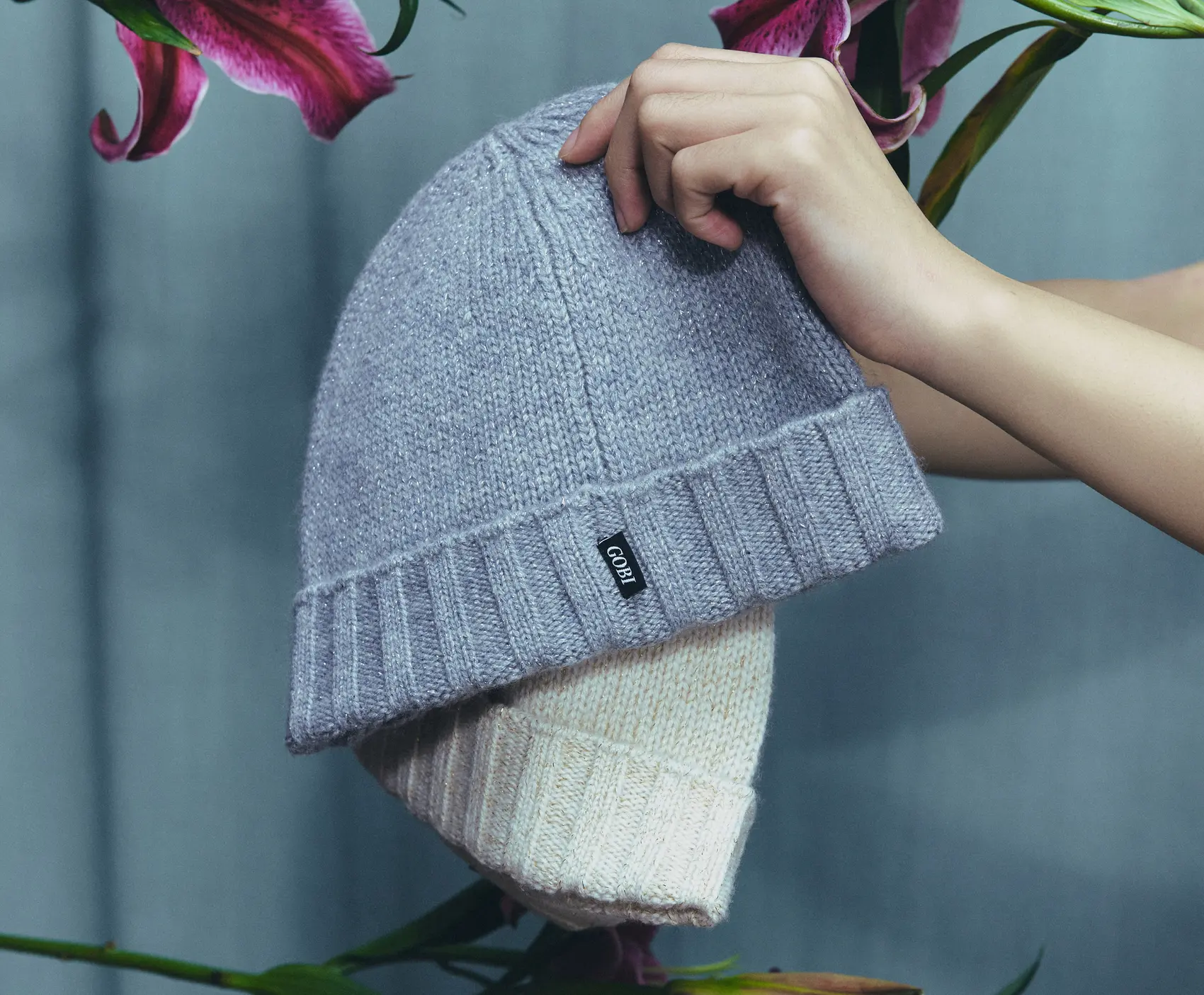
Gobi cashmere

Origins of Cashmere and Wool

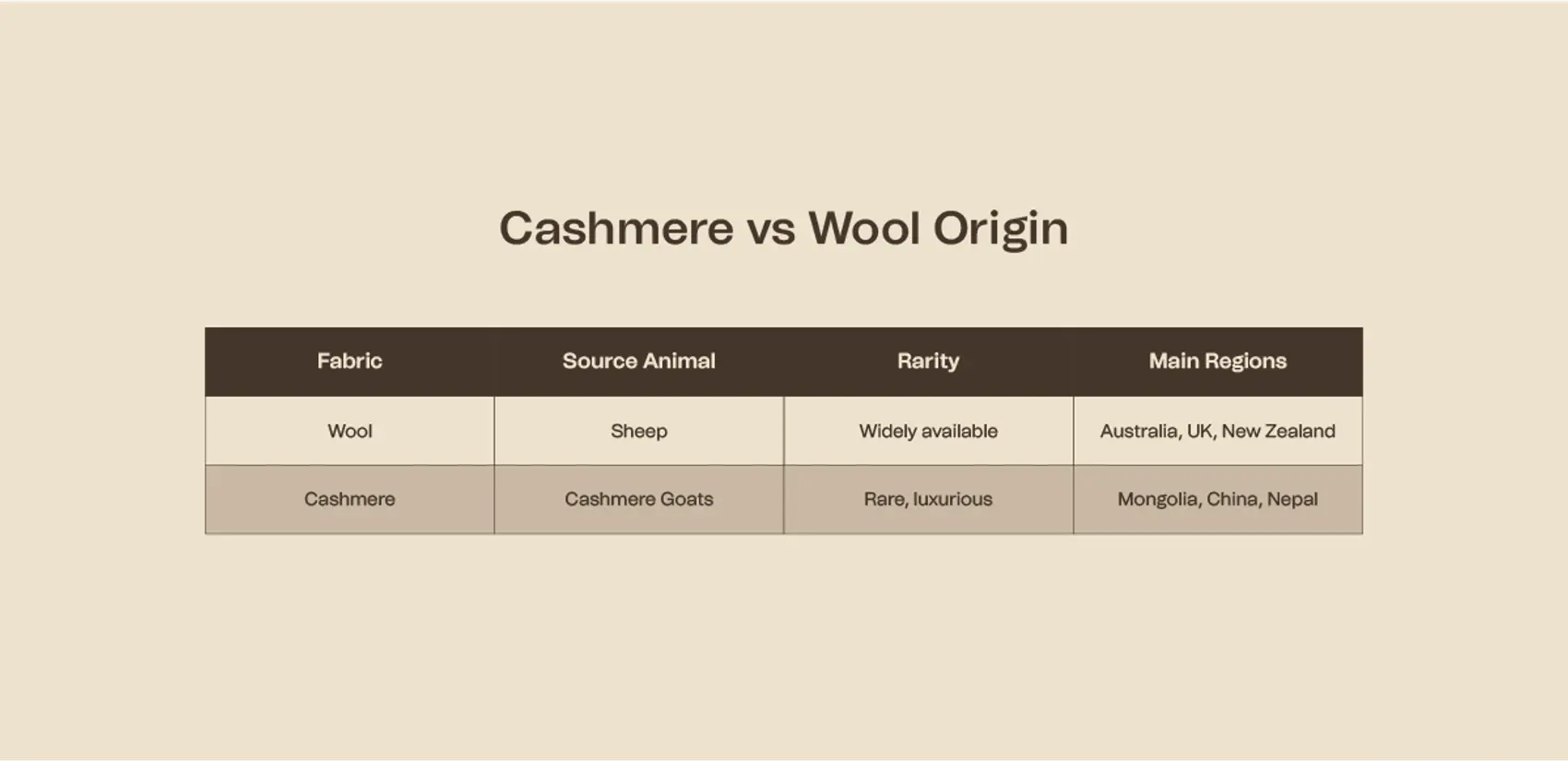
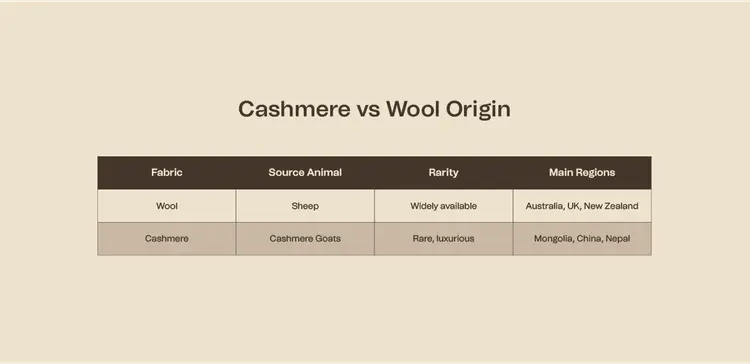
To understand cashmere vs wool fabric, it helps to look at where each originates and what makes them distinct.

Where Does Wool Come From?

Wool comes primarily from sheep, making it one of the most widely available natural fibers. It’s durable, insulating, and relatively affordable, which is why wool is used in everything from rugged jumpers to tailored coats. The widespread availability of wool ensures variety in quality and price, but its texture can sometimes feel coarse against the skin.

Where Does Cashmere Come From?

Cashmere is obtained from the undercoat of cashmere goats, particularly those living in Mongolia’s harsh climate. Because each goat produces only a few ounces of usable fiber annually, cashmere is considered rare and luxurious. This scarcity, combined with its unmatched softness, places it above wool in both quality and value.
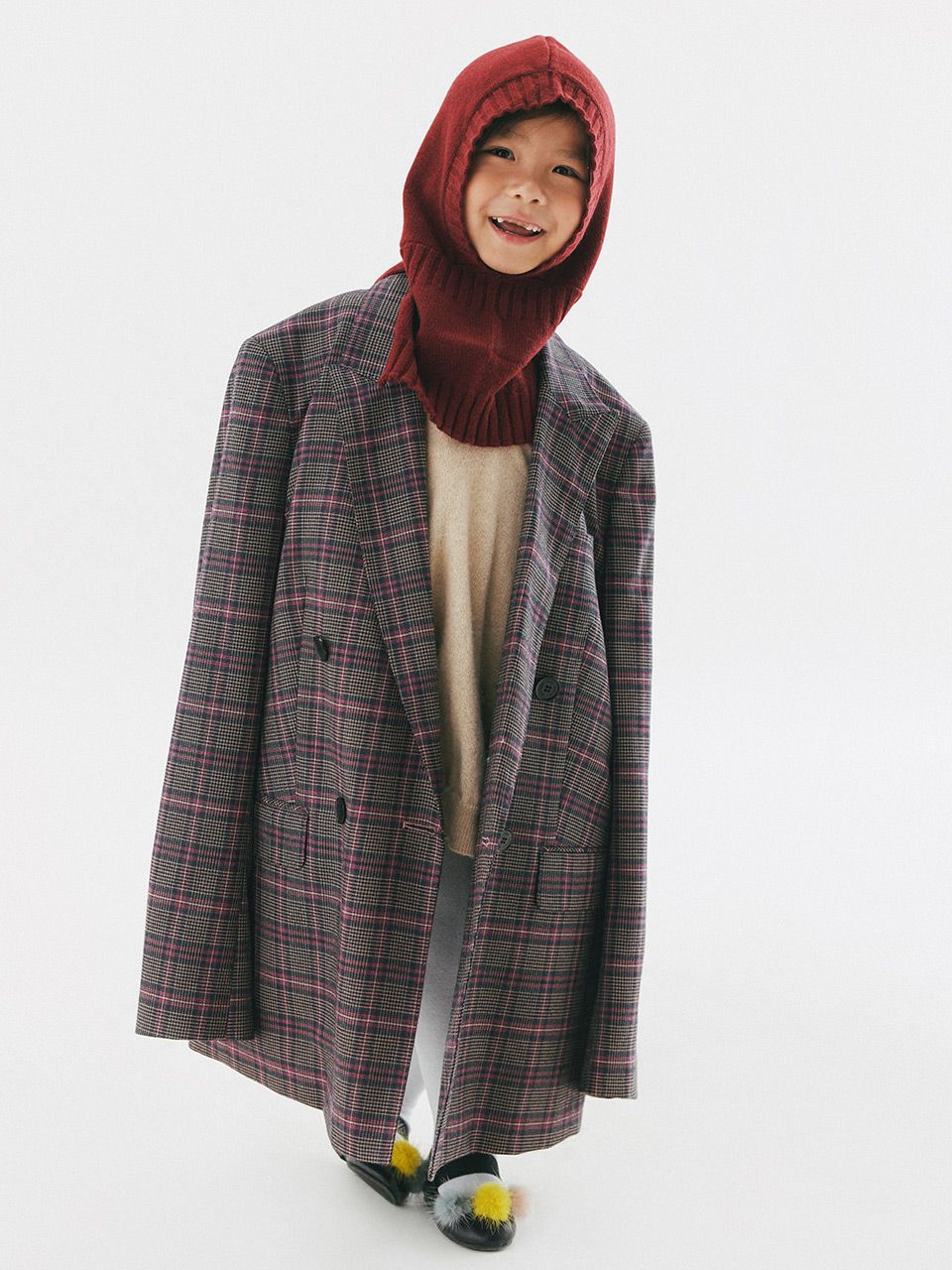
Gobi cashmere

Cashmere vs Wool – Key Fabric Differences

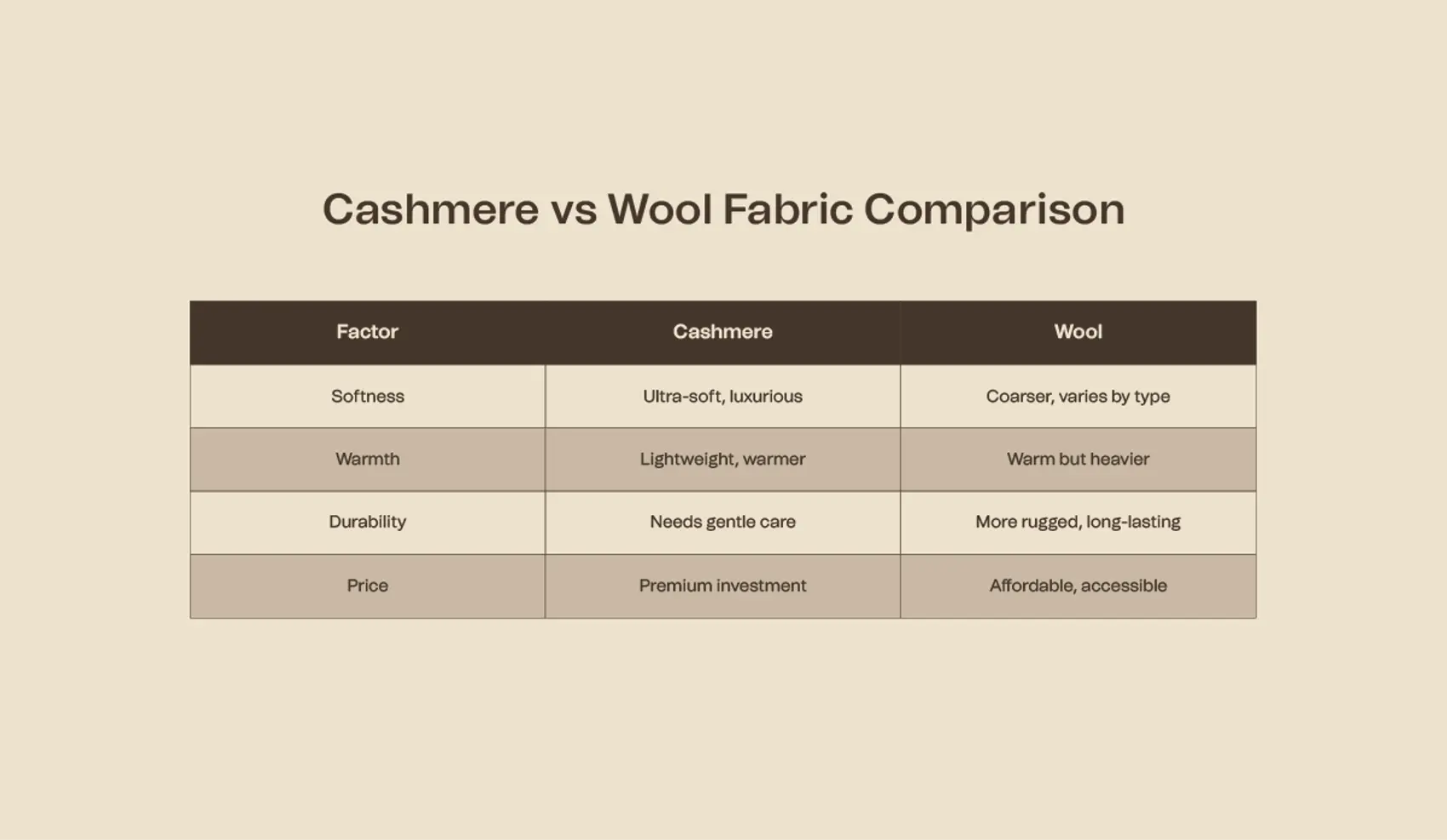
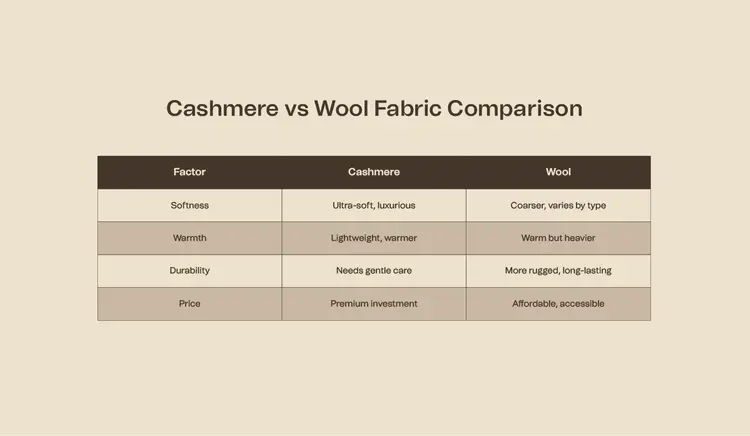
When comparing cashmere vs wool, softness, warmth, durability, and price highlight their differences.

Softness and Feel

Cashmere is renowned for being buttery soft and lightweight, making it the choice for essential cashmere clothes like a cashmere sweater, cashmere cardigan, or cashmere scarf. Wool, while warm, is often coarser unless treated or blended with softer fibers.

Warmth and Insulation

The cashmere warmth vs wool debate leans in cashmere’s favor. Cashmere is up to eight times warmer than wool, despite being lighter. Wool provides solid insulation but feels bulkier.

Durability and Longevity

In terms of cashmere durability vs wool, wool is naturally more rugged for everyday wear. Cashmere requires more delicate care but can last for decades when handled properly.

Quality and Price

Cashmere quality vs wool quality highlights the luxury of cashmere. Its rarity and production process make it more expensive. Wool remains a reliable, cost-effective option for daily outerwear.
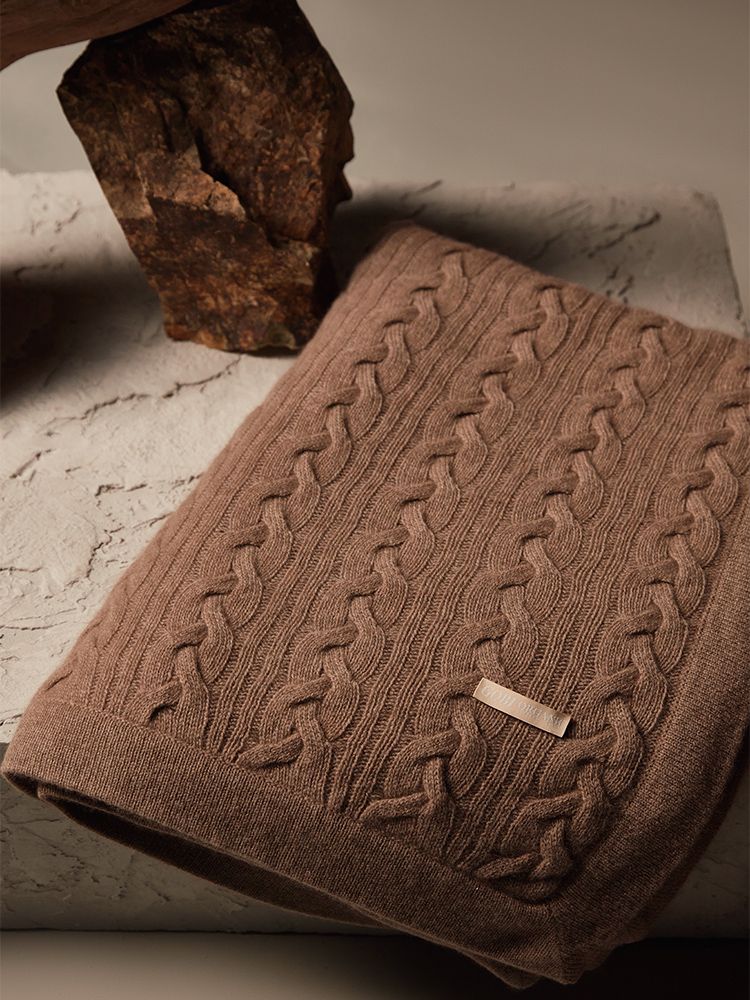
Gobi cashmere

Benefits of Cashmere vs Benefits of Wool

Both fabrics have strengths, but the benefits of cashmere stand apart in luxury and feel.

Benefits of Cashmere

  • Feather-light warmth and breathability
  • Ultra-soft against the skin, ideal for sensitive wearers
  • Timeless style, from a cashmere hoodie to a women's cashmere coat
  • Elevates everyday outfits into luxury experiences

Benefits of Wool

  • Strong and versatile for daily use
  • Moisture-wicking, suitable for outdoor activity
  • Affordable across a wide range of garments
  • Available in many blends and textures

Why Mongolian Cashmere Stands Out

When exploring Mongolian cashmere vs regular wool, Mongolia’s extreme climate is the deciding factor. Goats in sub-zero winters develop ultra-fine fibers to survive. These fibers are hand-combed during spring, producing the world’s softest and most resilient cashmere.
So, why is Mongolian cashmere better than wool?
  • Finer fibers mean unmatched softness.
  • Lightweight yet warmer than wool
  • Long-lasting luxury that maintains its beauty
  • Ethically sourced and sustainably produced by GOBI
This is why luxury cashmere knitwear from Mongolia is globally regarded as the best investment in timeless elegance.
Gobi cashmere

Cashmere vs Wool for Winter Wear

When it comes to cashmere vs wool for winter wear, both fabrics have roles to play depending on need.
  • Choose cashmere for refined, lightweight warmth. A cashmere sweater, cashmere shawl, or cashmere hat & gloves set elevates cold-weather dressing with sophistication.
  • Choose wool for rugged, everyday durability. Wool coats or jumpers are practical and affordable for outdoor activities.

How to Care for Cashmere vs Wool

Caring for each fabric differently helps preserve its qualities.

Caring for Cashmere

  • Hand wash with a mild detergent
  • Lay flat to dry; store folded
  • Use a cashmere comb to remove pillingWith proper care, luxury Mongolian cashmere clothing lasts a lifetime.

Caring for Wool

  • Often machine washable, but follow labels
  • Avoid high heat to prevent shrinking
  • Store clean and dry to protect fibers.

So, cashmere or wool? Wool is practical, durable, and accessible, perfect for everyday use. But if you seek softness, elegance, and investment-worthy style, Mongolian cashmere is unmatched. From a timeless cashmere hoodie to a versatile cashmere cardigan or travel-ready cashmere scarf, GOBI’s collection celebrates cashmere quality vs wool quality with heritage craftsmanship and modern design.
In short: Wool keeps you warm, but Mongolian cashmere elevates your wardrobe into a statement of enduring sophistication. That’s why GOBI is home to the best cashmere collection, offering the softest fibers, responsibly sourced, and designed for a lifetime of style.

FAQs


Is cashmere warmer than wool?

Yes, cashmere is warmer than wool. Its ultra-fine Mongolian fibers provide up to eight times more insulation, delivering lightweight warmth without bulk, making it ideal for luxurious winter wear.

Which is more durable: cashmere or wool?

Wool is naturally more rugged for daily wear, while cashmere requires gentler care. With proper maintenance, however, high-quality Mongolian cashmere can remain soft, beautiful, and long-lasting for decades.

Is cashmere worth the higher price compared to wool?

Yes. Cashmere offers unmatched softness, lightweight warmth, and luxury appeal. Its rarity and longevity make it a worthwhile investment, offering superior comfort and timeless elegance compared to everyday wool.

Which is better for winter wear, cashmere or wool?

For elegance and lightweight warmth, cashmere is better. For rugged, affordable durability, wool works well. Many wardrobes include both, with cashmere reserved for timeless luxury and wool for everyday use.

Does cashmere last longer than wool with proper care?

Yes. With careful washing, storage, and de-pilling, cashmere can last decades while retaining softness. Wool is sturdy, but properly maintained cashmere becomes a lifelong investment in enduring luxury.

Can you machine wash wool but not cashmere?

Yes. Many wool garments are machine washable, though labels should be checked. Cashmere is more delicate and typically requires hand washing or professional cleaning to preserve softness and longevity.

Free standard shipping within EU over €299 purchase
Very easy, 14 days return policy
Without Risk & Simple Payment
All our collections are 100% made in Mongolia